Bariatric Surgery Twenty Years Later: The Swedish Obese Subjects Study
Twenty years of follow-up say the weight comes off, creeps back a little, and then stays put, which took a great many phone calls to learn.
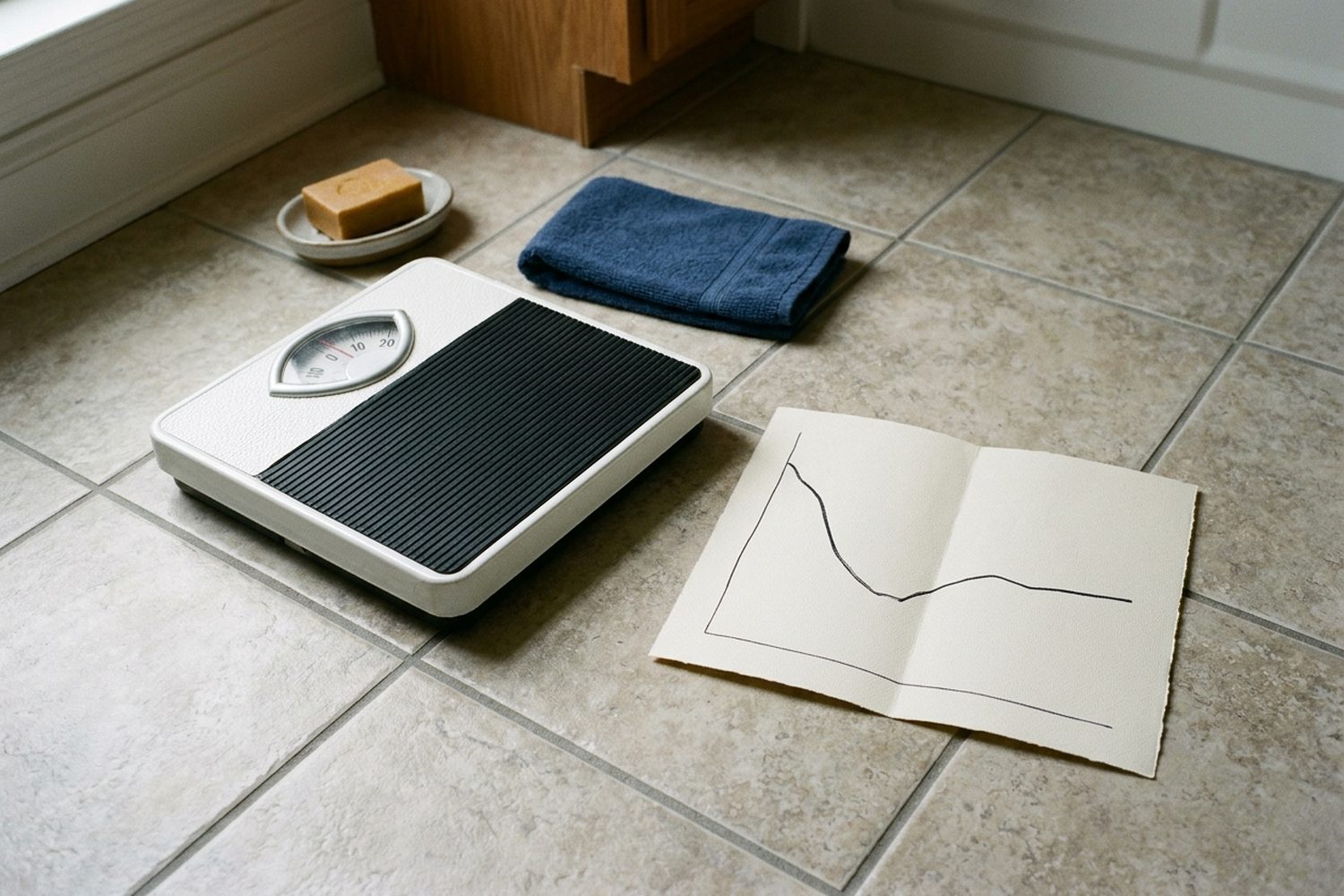
Here is how a gastric bypass ages. In a Geisinger study of people who had Roux-en-Y gastric bypass and were followed for up to 20 years, average weight loss peaked at 31.8% of body weight at 18 months, then drifted back and settled at 23% between year 10 and year 20. It stopped moving. That is basically the whole story, and the rest of this article is the long version of it.
If you want to know what bariatric surgery long term actually does, the plain answer from the studies that follow people for a decade or more is this. Most of the weight loss holds at a lower level than the peak. Diabetes often stays in remission, depending a lot on how bad it was going in and which operation was done. A meaningful share of patients need a second operation. A few slow problems, like bone health, show up years later. The Swedish Obese Subjects study is the famous name in this field, and its own numbers are not among the sources this article is built on. So I won’t quote them. What follows comes from the other long-term cohorts that are.
The dumb version: weigh people for twenty years
The simplest way to judge an operation is to weigh people before it, weigh them after it, and keep weighing them until the research grant runs out. Geisinger did roughly this. Its patients started at a mean age of 46 and a mean BMI of 47.9, and the follow-up is unusually good: 68% of patients (1,388 people) had 10 or more years of data, and 48% (987 people) had more than 15. In a field where people move, change insurance and stop answering the phone, that is a lot of phone calls.
I assume some of those calls went like this (invented, but plausible): “Hi, this is the bypass study. You may remember us from your surgery. Could you step on a scale and tell us what it says?” Do that a thousand times a year for two decades and you get a curve. It goes down hard, bottoms out at 18 months, comes back up a bit, and flattens.
Other operations land in the same neighborhood. A review of results at 10 years and beyond found weighted mean total weight loss ranging from 24.4% for sleeve gastrectomy to about 40% for the duodenal switch. A separate review put the sleeve at 25 to 30% total weight loss at two to five years. So the sleeve also gives some back. Everything gives some back.
The trap in the dumb version is the peak. Judging an operation by its 18-month number is like judging a basketball player by his best season and assuming he plays that way at 39. (Hospitals that only report first-year results are not lying, exactly. They are just leaving the room early.) Pushed to its limit, this produces a made-up clinic whose entire follow-up schedule is one visit at month 18, forever, so that every patient it has ever treated is permanently at peak weight loss, and its brochure shows a 31.8% line extending to the heat death of the universe. Nobody runs that clinic. The long-term studies exist so that nobody can.
The sophisticated version: count the deaths, the diabetes and the second operations
The sophisticated version says weight is a proxy. What we actually care about is whether people live longer, whether their diabetes goes away and stays away, and how many times they end up back in an operating room. This is a much harder set of questions, and it takes much longer to answer.
Start with deaths. In the Geisinger cohort, the overall 15-year mortality rate was 13.3%, rising to 37.4% among patients with diabetes who were older than 60. That reads like a verdict on the operation. It is actually a verdict on something else: these were people who walked in at 46 with a BMI near 48, often with diabetes, and then lived for 15 more years. The American Society for Metabolic and Bariatric Surgery, describing the study, said “no deaths” were “related to the surgical procedure itself.” Without a matched group of similar people who did not have surgery, the 13.3% cannot tell you on its own whether the surgery saved lives. That comparison is the thing a study like Swedish Obese Subjects was designed to make, and it is not settled by the facts here. A 2026 systematic review comparing surgery with semaglutide and tirzepatide did report surgery ahead across five outcome groups, one of which was major cardiac events and all-cause mortality. For context, a six-year cohort of 1,377 endoscopic sleeve patients reported no mortality, which is a different procedure measured over a shorter window.
Then diabetes. A Mayo Clinic study found 75% of bypass patients still in diabetes remission at five years even after regaining weight, compared with 34.8% of sleeve patients, and the odds of the diabetes coming back were 5.5 times higher after the sleeve. Geisinger found diabetes was much more likely to persist in people who were on insulin before surgery. A review in Clinical Diabetology summed this up as long-term results that “depend largely on disease severity and residual β-cell function.” In plain words, the operation works best on a pancreas that still has some fight left. The DIABETCIR trial, which randomized 45 patients across three operations, found that a shorter history of diabetes, more weight lost in year one, and an early rise in GLP-1 hormone all predicted remission at ten years, regardless of technique. (The body makes its own GLP-1. An entire drug industry now exists to supply more of it.)
I mean, this is all sort of thing that makes sense in hindsight. The more damage was done before the operation, the less the operation can undo.
Durability, or how often the first operation is the last one
Here the sophisticated version gets uncomfortable. In the Polish BARI-10-POL study of 485 patients operated on between 2008 and 2014, revisional surgery was needed in 23.9% of patients over ten years, including 24.3% of sleeve patients. Among adjustable gastric band patients, the revision rate was not high. Correction: it was 100%. Every single one. That is not a complication rate so much as a scheduling assumption.
The American LABS study, which followed patients at 10 hospitals from 2006 to 2009 surgery dates through early 2015, saw the same pattern from another angle: 14 reoperations among bypass patients versus 160 among band patients over seven years. The band did not age well. (Its history gets its own article on this site, so I’ll leave it there.)
Revisions are not free. A review in Frontiers put it this way: surgical revision and conversion “are associated with higher morbidity and mortality compared to the primary surgical intervention.” Pouch resizing after bypass weight regain stabilized BMI from 39 to 35 at five years but carried a 10.4% serious complication rate. When a sleeve is converted to a one-anastomosis bypass, leakage was the most common major complication. So the line between “I had weight-loss surgery” and “I have an ongoing arrangement with a surgical department” is, for a quarter of patients, a little blurry.
The late complications that take a decade to show up
Some costs only appear if you wait. A prospective study of 60 patients (20 bypass, 20 one-anastomosis bypass, 20 sleeve) checked bone density at a mean of 10.1 years. Lumbar spine density showed no significant change, which is fine. But the estimated 10-year risk of major osteoporotic and hip fractures was elevated after all three operations. Sixty people is small. It is a signal, not a settled number, and nobody knows its size precisely from this.
Then there is the skin. People who lose a great deal of weight often have surgery to remove what is left over, and one review found major complications after abdominoplasty in 22.0% of bariatric patients versus 8.5% of diet-and-exercise patients. After adjusting for BMI, the amount of tissue removed and diabetes, the difference was no longer significant. Bypass patients specifically had a 39.1% major complication rate, in a subgroup of 23 people. So, in some sense, the surgery’s late complications include the complications of its own success, lol, which is a strange sentence to write about a hospital procedure.
Where the two versions end up
The dumb version weighs people and concludes that the operation keeps about a quarter of their weight off for twenty years. The sophisticated version counts deaths, remissions, fractures, leaks and revisions, adjusts for baseline disease, argues about comparison groups and then concludes, after many more pages, that the operation keeps working at a lower level than its peak, works better on earlier disease, and sometimes needs a second operation. I don’t know that the extra pages changed the answer. They changed how confident anyone can be in it. (I write about this from a desk, so my own longitudinal data is mostly rereading abstracts and noticing the follow-up percentages.)
The 2026 review comparing surgery with the newer drugs found five-year weight loss of 25 to 32% after surgery versus 14.9 to 20.9% on semaglutide or tirzepatide. The surgical number there looks a lot like the Geisinger plateau. It took twenty years of phone calls to find it.
The weight goes down, comes back a little, and then stays.
Sources
- Diabetes remission 10 years after bariatric surgery: Extension study of a randomized controlled trial
- Changes in bone metabolism and densitometry after metabolic/bariatric surgery: a comparison of pre- and postoperative results in a prospective long-term study
- Roux-en-Y gastric bypass results in long-term durable weight loss and diabetes remission: a single center, > 15 year outcomes
- New Study Shows Long-term Effectiveness of Gastric Bypass in Treating Type 2 Diabetes and Obesity - American Society for Metabolic and Bariatric Surgery
- Bariatric Surgery and Type 2 Diabetes Remission and Relapse: Mechanisms, Predictive Factors, and Postoperative Management — a Review Article | Ciesielska | Clinical Diabetology
- Long-term outcomes of metabolic bariatric surgery: a 10-Year multicenter retrospective study in Poland (BARI-10-POL)
- A Comprehensive Review of Sleeve Gastrectomy, Roux-en-Y Gastric Bypass, One-Anastomosis Gastric Bypass, Duodenal Switch, and SADI-S: Very Long-Term Outcomes at 10 Years and Beyond
- Incretin-Based Therapies Versus Bariatric and Metabolic Surgery for Obesity and Type 2 Diabetes Mellitus: A Head-to-Head Systematic Review of Glycaemic, Cardiovascular, Hepatic, Weight, and Quality-of-Life Outcomes
- Seven-Year Weight Trajectories and Health Outcomes in the Longitudinal Assessment of Bariatric Surgery (LABS) Study
- Pouch Resizing for Weight Regain after Roux-En-Y Gastric Bypass: Results from a High-Volume Single Center
- Endoscopic Sleeve Gastroplasty: 6-Year Outcomes in 1,377 Patients
- A Comparative Outcome Review of Abdominoplasty Following Massive Weight Loss
- Frontiers | Endoscopic Management of Weight Recurrence Following Bariatric Surgery
- One Anastomosis/Mini-Gastric Bypass (OAGB/MGB) as Revisional Surgery Following Primary Restrictive Bariatric Procedures: a Systematic Review and Meta-Analysis
- Gastric Bypass Improves Long-Term Diabetes Remission, Even After Weight Recurrence | ACS
- Continued Diabetes Remission Despite Weight Recurrence: Gastric Bypass Long-Term Metabolic Benefit.
- Shaping the Future of Restrictive Bariatric Surgery: Clinical, Economic, and Long-Term Perspectives on Endoscopic and Laparoscopic Sleeve
Bariatric Alt explains published research. It is not medical advice, and it never recommends a surgeon, a clinic, a dose or a product. Talk to a clinician about which option fits you.